By the end of 1918, both German-Austria and Hungary had proclaimed themselves to be Republics, and both laid claim to German West Hungary. While many sections of the ethnic German population of western Hungary preferred the idea of a union with German-Austria, others recommended autonomy of the area within Hungary.
The Austrian delegation in Paris informed the Allies that it was in favour of a plebiscite being held in German West Hungary. However the Treaty of Saint Germain allocated the entire area (ie Sopron, Moson and Vas counties) to Austria without a plebiscite. Also, Austria desperately needed its agricultural produce - it had been called "Vienna's Garden". Hungary was a Soviet Republic from 21 March to 1 August 1919. When that was overthrown by Miklós Horthy, Hungary put up unremitting resistance at political and diplomatic levels to the altering of the frontiers according to the Treaties of St. Germain and Trianon. In the following two years Horthy insisted on keeping the area of German West Hungary under Hungarian administration.
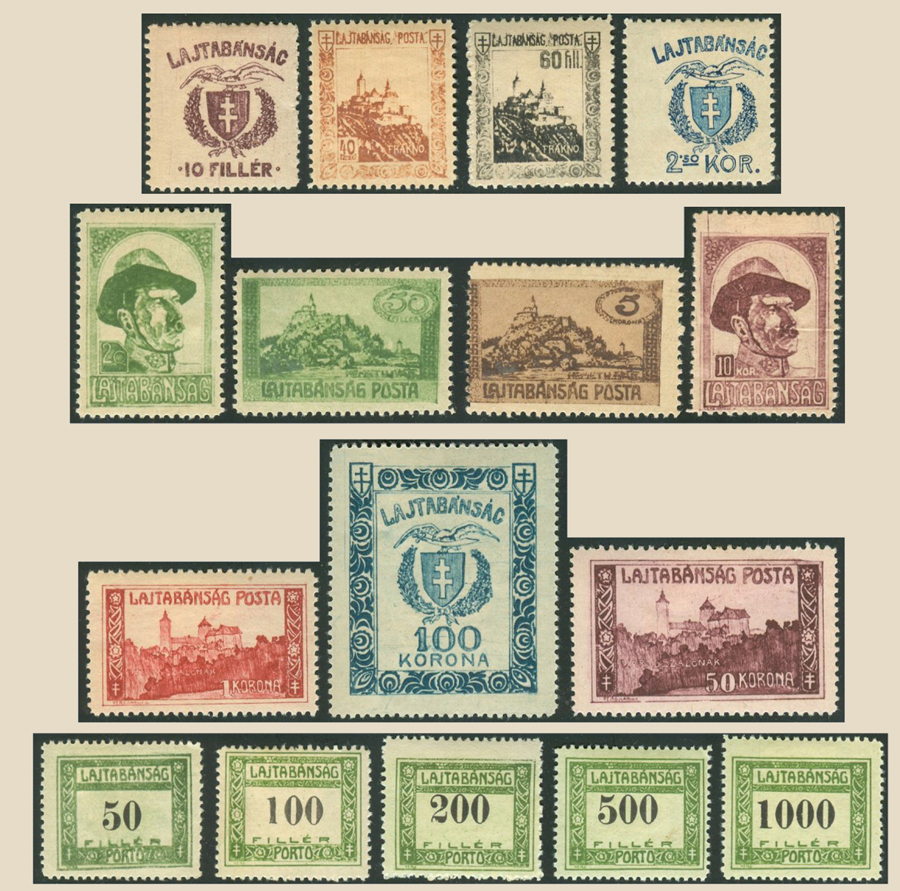
The Austrian Army tried to occupy the territory on 28 August 1921 and were forcibly prevented from doing so by Hungarian guerrillas. On 4 October 1921 the Lajtabánság Republic was proclaimed in Oberwart and claimed the whole area for Hungary. It existed until 5 November 1921, supported by a militia recruited from peasants and students devoted to retaining the region rather than surrendering it to Austria.
Hungary would only hand over Burgenland to Austria if it gave up Ödenburg/Sopron. The Czechs and Italians offered to mediate. Chancellor Schober chose the Italians (and much ink has been spilled on why) and the Venice Protocols were signed in December 1921. The irregulars withdrew at the order of Horthy. The Italians had proposed a referendum in Ödenburg/Sopron (the regional capital) and surrounding villages. The city chose Hungary, but most of the villages chose Austria; the total vote was 66% for staying in Hungary. There is still debate over who did what and when and whether they were rewarded for their actions. German West Hungary, which since 1919 had referred to itself as Burgenland, was officially incorporated into Austria on 5th December 1921. The Ödenburg/Sopron plebiscite was held on 14-15th December, resulting in the Ödenburg/Sopron territory remaining Hungarian.
As a taster, two of the many issues will be mentioned here. On 4 October 1921 the Lajtabánság Republic was proclaimed in Oberwart and claimed the whole area for Hungary. It existed until 5 November 1921, and produced numerous stamps including definitives and dues; some are known used.
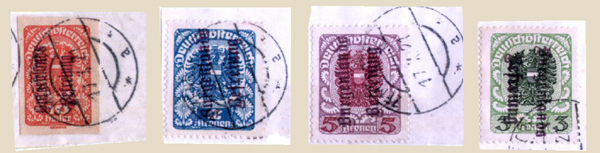
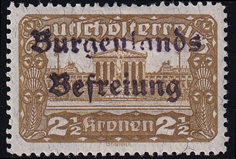
A souvenir edition was produced for "The Liberation of Burgenland" (probably unofficially, and in Vienna). Two sets of the current Austrian definitives were overprinted: the first a set of 18 values on 17th October 1921, overprinted with Burgenland Befreiung in two lines vertically; the second set of 5 stamps had the Burgen/land overprinted in two lines horizontally. The top row shown here has a cancellation "ZEMENDORF / 17.X.21" which is a town in the Burgenland district of Mattersburg.


A presentation, with many more details of the stamps of this period.
A lengthy diatribe, setting forth the Magyar view of the events.
©APS. Last updated 22 March 2024